What you need to know
Collision repair in Edmonton
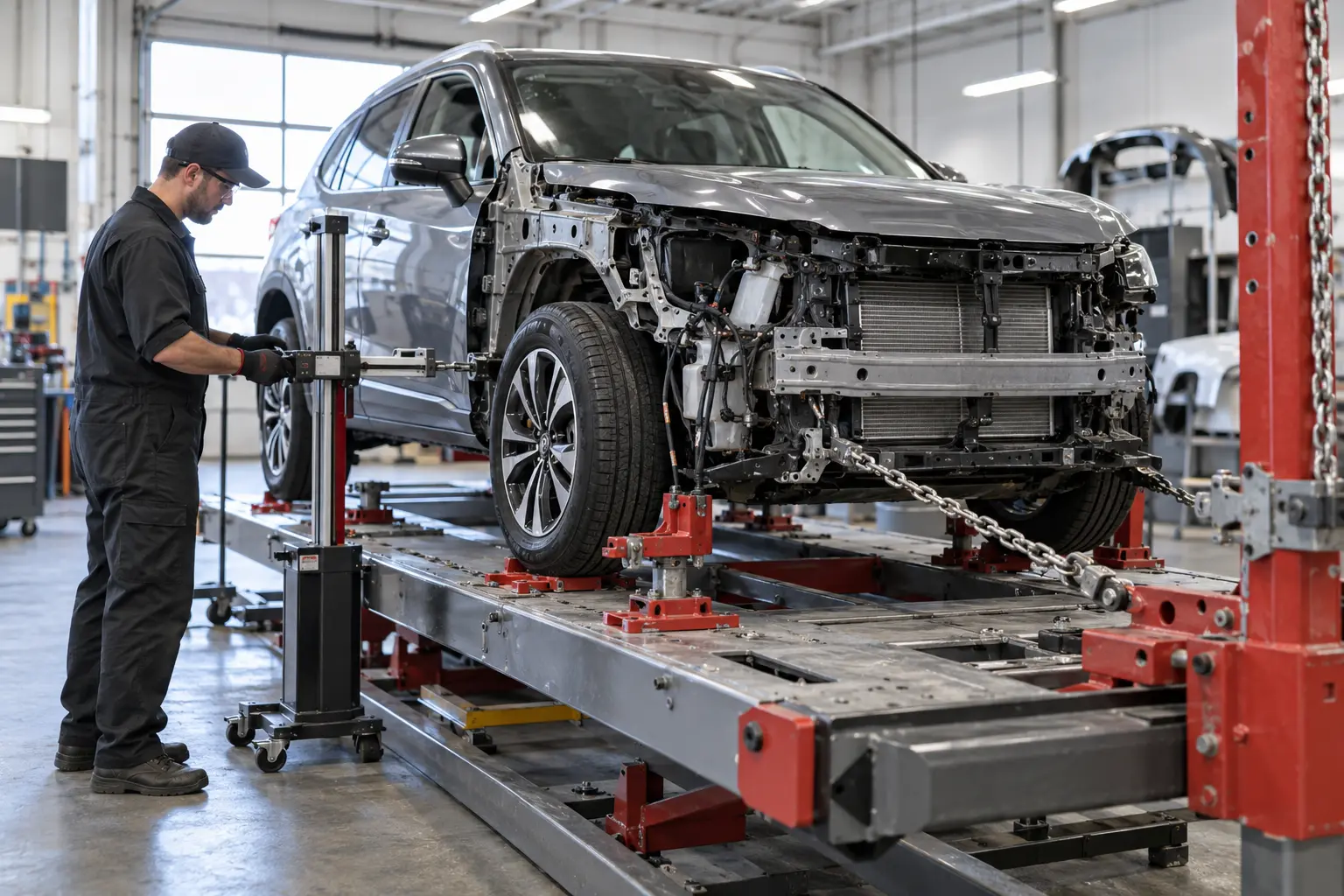
After a collision, the visible dent, bumper damage, broken light, paint scrape, or panel gap may be only part of the picture. DAS Automotive provides collision repair in Edmonton with an assessment that considers the affected body area and related mechanical, tire, suspension, alignment, lighting, and structural concerns. We explain the repair plan before work begins and keep customers informed if additional damage becomes visible.
DAS Automotive has served Edmonton drivers since 2012. We begin by listening to the customer’s concerns, reviewing the vehicle history that matters, and confirming the right service before work starts. The goal is to identify a practical repair direction and explain it clearly. If repair work is recommended, DAS provides an estimate and waits for customer approval before additional work is completed.
When to book collision repair
Book a collision assessment after an accident, parking-lot impact, curb or pothole strike, damaged bumper, scraped panel, broken light, bent component, door problem, or a change in how the vehicle drives. An early assessment helps separate cosmetic work from conditions needing more inspection.
- Visible body damage: A bumper, fender, door, quarter panel, hood, trunk, mirror, grille, light, or trim piece is damaged.
- Paint damage: The vehicle has scratches, chips, peeling, cracks, scuffs, or exposed finish after an impact.
- Panel fit change: A door, hood, trunk, bumper, or panel no longer lines up, opens, closes, latches, or fits normally.
- Wheel or suspension impact: Damage occurred near a wheel and the vehicle now pulls, vibrates, sits differently, or shows tire concerns.
- Lighting or sensor issue: A light, signal, camera, sensor, grille component, or feature changed after the impact.
- Under-vehicle concern: You see loose parts, a fluid leak, dragging material, exhaust change, or new noise after contact.
- Estimate questions: You have an insurer or repair estimate and want a clearer assessment before deciding the repair approach.
- Prior collision history: You are considering a vehicle with visible repair history and need a body or collision-condition discussion.
Visible damage or a vehicle symptom is a starting point, not an automatic diagnosis. Similar noises, warnings, performance changes, or panel damage can have different causes. DAS evaluates the vehicle and explains whether the concern can be addressed in the appointment, needs a different service, or requires further testing before a repair can be recommended responsibly.
How the appointment works
A clear process helps the customer know what to expect before, during, and after the visit. DAS uses the following approach for collision repair:
- Step 1 — Document the impact. DAS asks what happened, where the vehicle was hit, whether it was driven afterward, and what has changed.
- Step 2 — Assess the affected areas. The team reviews visible damage and signs that mechanical, suspension, alignment, lighting, or structural assessment is needed.
- Step 3 — Build a repair direction. DAS explains whether the plan involves panel repair, parts, paint, collision work, frame or suspension follow-up, or additional inspection.
- Step 4 — Review the estimate. The customer sees the recommended repair plan and can ask questions before work begins.
- Step 5 — Communicate changes. If additional damage becomes visible once work is underway, DAS discusses it before adding work to the estimate.
If additional damage or a separate fault appears during assessment, DAS explains it before adding work to the plan. Some vehicle conditions can only be confirmed after more diagnostic time, removal of a component, or a focused follow-up inspection. DAS identifies those limits plainly so customers know what was checked and what may need another step.
Collision repair services DAS can coordinate
Every impact is different. Depending on the assessment, the repair plan may include:
- Bumpers and panels: Repair planning for damaged bumper covers, fenders, doors, hoods, trunks, quarter panels, and exterior parts.
- Body preparation: Repairing or preparing affected areas so panels, components, and finishes can be restored consistently.
- Paint and refinishing: Refinishing damaged panels, scratches, and collision repairs with the preparation appropriate to the repair plan.
- Lights and trim: Assessment of lights, mirrors, grille areas, handles, mouldings, trim, and visible components affected by impact.
- Frame and suspension follow-up: Referral to frame, steering, suspension, or alignment work when an impact may have affected how the vehicle drives.
- Tires, wheels, and brakes: Checking related tire, wheel, brake, and alignment clues after an impact near a wheel or under-vehicle area.
- Diagnostics and mechanical support: Coordinating separate mechanical or diagnostic assessment when warning lights, electrical issues, leaks, or drivability changes follow a collision.
- Parts planning: Discussing appropriate new, used, or aftermarket part options available through DAS as part of an approved repair estimate.
The service is completed based on the agreed scope and the vehicle condition that can reasonably be assessed at the time. This protects customers from an overbroad promise and helps them make better decisions. DAS distinguishes between an observed condition, a repair recommendation, an item to monitor, and a concern that needs more diagnosis.
How to prepare
Take photos if safely possible, note the impact date and area, and bring any repair estimate, claim information, or prior photos. If a tire is damaged, the vehicle leaks fluid, a light is broken, steering has changed, or the vehicle does not drive safely, explain that before travelling to the shop.
When booking, provide the year, make, model, mileage, any dashboard warning, and the circumstances surrounding the concern. Note whether it occurs only when cold, after the vehicle warms up, while braking, while turning, at highway speed, over bumps, after a collision, or when a particular system is on. These details help DAS schedule the right appointment and prepare for a focused assessment.
Bring relevant documents if you have them: previous repair invoices, photos, an insurer estimate, collision paperwork, or a prior diagnostic report. These records provide useful history but do not replace an inspection. DAS verifies the current condition before recommending a repair.
Edmonton driving and collision repair
Edmonton winter roads, parking lots, construction zones, potholes, gravel, ice, and dense city traffic can cause damage from paint scuffs to complex impacts. Damage near a wheel or bumper can affect body panels as well as alignment, suspension, lights, and mechanical components, so DAS looks beyond the visible surface.
Edmonton vehicles face winter cold, rapid temperature shifts, potholes, gravel, road salt, construction zones, highway travel, and stop-and-go traffic. These conditions can reveal or worsen mechanical, suspension, tire, electrical, cooling, collision, and paint concerns. DAS connects what the driver sees or feels with the vehicle condition instead of using a generic repair answer.
Related services in one Edmonton location
DAS can coordinate mechanical auto repair, vehicle diagnostics, brake repair, tire services, wheel alignment, frame and suspension repair, collision repair, and auto body and paint repair when the vehicle needs more than one type of service. Each repair is discussed and estimated separately so customers remain in control.
Frequently asked questions
Can you repair body damage and mechanical issues?
DAS can coordinate collision, paint, mechanical, tire, alignment, and diagnostic services. Each repair is assessed and estimated separately for approval.
Do I need an estimate first?
An assessment is the right starting point. Bring an existing estimate if you have one, but DAS inspects the vehicle before confirming a repair plan.
What if more damage is found during repair?
DAS explains newly visible damage and any recommended work before adding it to the repair plan.
Can you help after a parking-lot scrape?
Yes. DAS can assess bumper, panel, paint, trim, light, and related concerns whether the damage is minor or more involved.
Should I drive after a collision?
If steering, brakes, tires, lights, fluid leaks, or control have changed, do not assume it is safe. Explain the condition before driving it.
Can collision damage cause a pull or vibration?
Yes. A tire, wheel, suspension, alignment, or frame-related area can be affected. Mention the pull or vibration at booking.
Book collision repair at DAS Automotive
Use the DAS online booking page or call 1 416 555 0120 to book collision repair in Edmonton. Tell us what the vehicle is doing, when the problem started, or where the damage is located. DAS will confirm the right appointment and explain what information to bring.
If you are unsure whether this is the right service, start with the symptom or damage you have noticed. DAS can help route you to the correct diagnostic, mechanical, tire, alignment, collision, body, or inspection appointment.
A practical decision guide for collision repair
This page is designed to help a customer understand the full repair path after vehicle impact damage, not only the first visible scratch or dent. The most useful repair decision comes from matching what the driver sees or feels with what the vehicle condition actually shows. DAS starts with bumper, panel, paint, light, trim, door, wheel, tire, suspension, alignment, leak, or warning changes after an impact, then checks the related systems before recommending a repair plan.
Clear information matters because automotive symptoms often overlap. One vehicle may have a pull from tire wear, while another has a steering, brake, wheel, alignment, suspension, or collision-related issue. DAS separates the observed condition from the proposed repair so customers can understand the reason for the recommendation.
Real-world situations that help DAS assess the vehicle
- Visible panel damage may not show every related condition, especially near a wheel, bumper, light, or under-vehicle area.
- A collision near a wheel can affect tire, wheel, steering, suspension, alignment, brake, or frame-related components.
- A new warning light or electrical feature change after impact may require diagnostic work in addition to body repair.
- A paint scuff can be cosmetic, but panel fit, loose parts, broken lights, leaks, or changed driving behaviour deserve a broader assessment.
- Insurance paperwork helps explain the request, but coverage and claims decisions remain with the insurer.
- Additional damage can become visible when a repair area is opened; DAS discusses it before adding work.
If a concern is severe—such as poor brake response, difficult steering, unsafe tire damage, overheating, a major leak, a strong fuel or electrical smell, or loss of vehicle control—do not treat it as a normal service delay. Explain the condition before driving to DAS and arrange appropriate help if it is not safe to drive.
Before you approve a repair
DAS provides a clear repair estimate after assessment or diagnosis. Customers can ask what was found, why the work is recommended, what happens if the repair is delayed, and whether any related service should be handled first. That conversation is important because parts, labour, alignment, paint, collision work, diagnostics, and tire work may each have their own role in the final repair plan.
A repair estimate is not a blank authorization. DAS waits for the customer’s approval before starting additional work. If a new condition appears during repair, DAS explains it before expanding the work. This gives the customer control while allowing the vehicle to be repaired in a logical order.
Customer checklist
- Take photos of the vehicle and damaged area if safe to do so.
- Note when and where the impact happened and whether the vehicle was driven afterward.
- Bring insurer information, estimates, and any repair records that relate to the damage.
- Mention changes in steering, braking, tire condition, vibration, lights, leaks, or dashboard warnings.
- Do not assume the vehicle is safe to drive if control, braking, tire, or fluid concerns have changed.
Bring the vehicle information, keys, and any relevant history. If another party is involved—such as an insurer, seller, fleet, or warranty provider—tell DAS early. The team can explain vehicle findings and repair options, while coverage, contract, or policy decisions should be confirmed with that other party.
Additional questions customers ask
Can DAS repair a bumper and check alignment?
DAS can coordinate body, collision, tire, alignment, mechanical, and diagnostic services. Each repair is assessed and estimated separately.
Do I need an insurer estimate to book?
No. Bring it if you have one, but DAS can assess the vehicle and explain the repair direction.
Can small collision damage affect driving?
It can, especially if impact occurred near a wheel, suspension, bumper support, light, or under-vehicle area.
Will DAS notify me if more damage is found?
Yes. Additional repair work is discussed before it is added to the plan.
Can you repair a vehicle with old collision damage?
DAS can assess the current condition and explain the appropriate repair options.
Keep related work connected
DAS can coordinate diagnostics, mechanical repair, brake repair, tire service, wheel alignment, frame and suspension repair, collision repair, and auto body and paint work when a concern spans more than one system. Each service is discussed and estimated separately so the customer chooses the work that makes sense.
A clearer collision-repair plan
The repair plan after impact damage should consider both appearance and vehicle function. A vehicle can have a small visible mark with related concerns in a light, bumper support, wheel, tire, steering, suspension, alignment, or electrical feature. DAS assesses the affected area so the plan does not stop at the first cosmetic issue.
- Photos and impact details give useful context before the assessment.
- Panel fit, loose trim, a damaged light, or a new warning can indicate that more than paint work is needed.
- Damage near a wheel deserves tire, wheel, steering, suspension, and alignment attention.
- Insurance documents can accompany the vehicle history, but DAS does not make coverage decisions.
- Newly visible damage during repair is discussed before the repair plan expands.
DAS keeps the customer in control of the next step. Inspection, diagnostic time, parts, body work, paint work, alignment, mechanical work, and tire service are explained as separate elements of the repair plan. If an additional condition is found, DAS explains what changed and why it matters before work is added.
DAS gives customers a repair direction in clear stages: what was observed, what must be assessed further, what repair is recommended, and what requires approval. That helps customers make an informed decision without surprise work.
For related needs, DAS can coordinate mechanical repair, diagnostics, brake repair, tire service, wheel alignment, and collision repair in Edmonton. The service is always discussed and estimated before customer approval.