What you need to know
Pre-purchase vehicle inspection in Edmonton
Buying a used vehicle is easier when you understand its visible and accessible condition before you commit. A pre-purchase vehicle inspection at DAS Automotive gives Edmonton buyers a structured review of the vehicle and a clear discussion of what was observed, what needs more investigation, and which repairs may affect the value or ownership plan.
DAS Automotive has served Edmonton drivers since 2012. We confirm the purpose of the appointment before inspection work starts, explain the agreed scope in plain language, and separate an inspection from any later repair decision. The goal is to give the customer usable information, not to bury the result in technical wording or pressure them into work they did not approve.
Who this service is for
A pre-purchase inspection is for a buyer who wants information before the deal is final. It does not replace the buyer’s own research, title or lien checks, insurance questions, or a seller’s disclosure obligations. It gives the buyer more reliable vehicle-condition information before negotiating, budgeting, or walking away.
- Before paying a deposit: You want a professional review before committing to a vehicle, trading in another vehicle, or agreeing to a private sale.
- Before travelling to buy: You want to determine whether an in-person inspection is worthwhile before arranging a long trip or transport.
- When the vehicle has history: You have questions about collision repairs, warning lights, tire wear, visible leaks, noises, or modifications.
- When a seller provides limited records: You need a practical condition baseline because maintenance records are incomplete or the seller cannot answer every technical question.
- When budget matters: You want to identify immediate repair needs and likely follow-up questions before deciding what the vehicle is truly worth to you.
If another party has asked for an inspection, bring that party’s current form, email, or written instructions. Requirements, forms, and submission processes can change. DAS confirms the correct appointment type before proceeding so the customer does not rely on an outdated checklist or assume that one inspection automatically satisfies every request.
What happens at the appointment
A clear inspection process starts with accurate vehicle information and a conversation about what the customer needs. DAS asks questions first so the technician knows the vehicle’s history, the reason for the visit, and any concern that needs attention.
- Step 1 — Confirm access and vehicle details. DAS confirms the vehicle’s location, the seller’s availability, the year, make, model, and the buyer’s concerns before the appointment.
- Step 2 — Discuss the buyer’s priorities. The buyer can tell DAS whether the main concern is safety, maintenance, a warning light, body condition, highway use, winter driving, or a specific symptom.
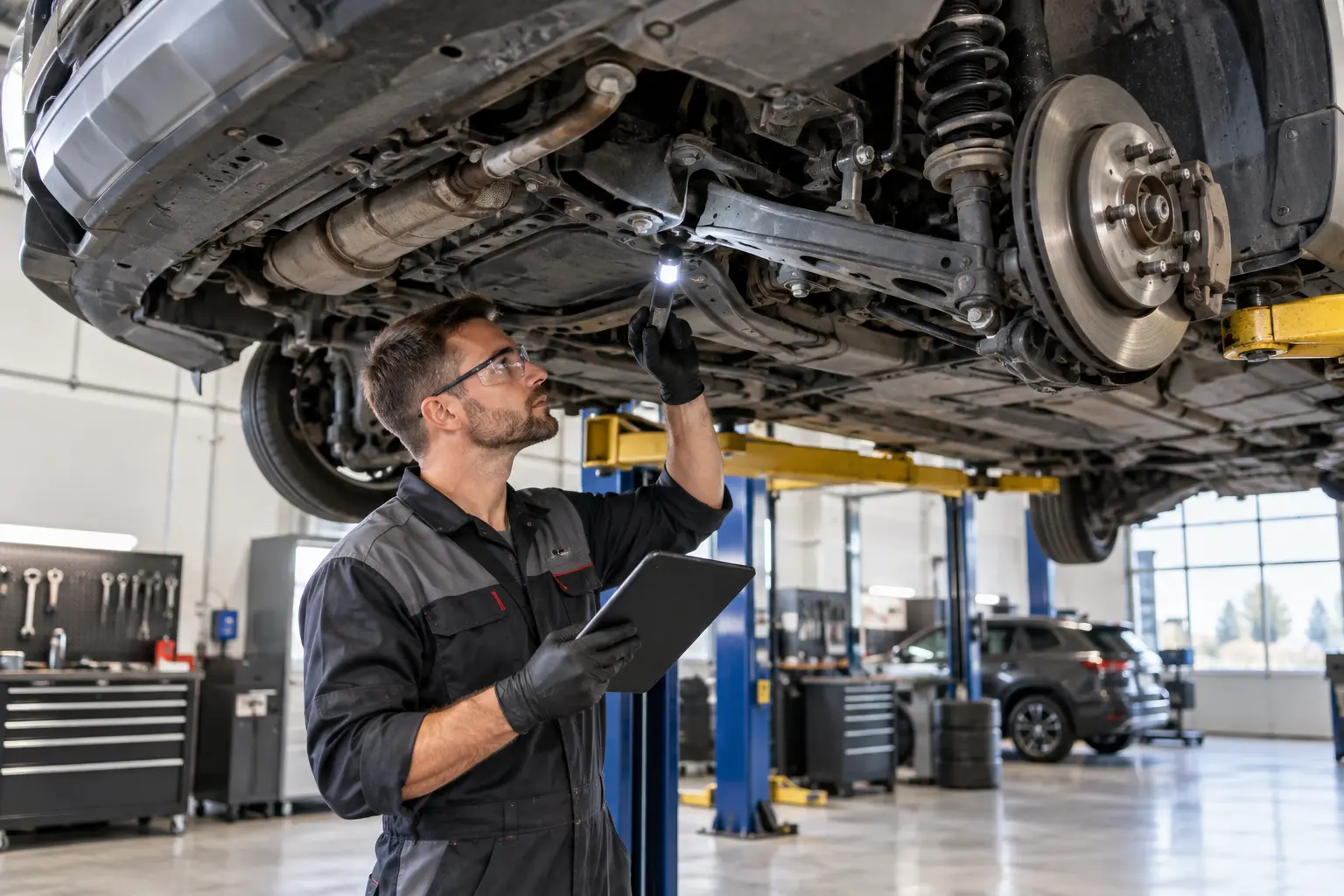
- Step 3 — Inspect the agreed accessible systems. The technician reviews relevant visible and accessible mechanical, tire, brake, suspension, body, lighting, fluid, and drivability areas.
- Step 4 — Document useful observations. DAS organizes the findings so the buyer can understand what was observed, what may need further diagnosis, and what should be budgeted for.
- Step 5 — Explain the result before the deal. The buyer receives a plain-language discussion that can be used to ask the seller better questions or request a repair estimate if needed.
The scope is limited to the service confirmed for the appointment and to the condition that can reasonably be observed or tested during that visit. Hidden damage, intermittent faults, or a question that needs disassembly or electronic diagnosis may require a separate estimate and further work. DAS will say so clearly rather than treat an incomplete check as a final answer.
What a pre-purchase inspection can review
The exact scope is confirmed before the appointment. A typical pre-purchase review considers the following when accessible and relevant to the vehicle:
- Engine and driveability clues: Starting, idle, warning lights, leaks, unusual noises, smoke concerns, rough running, and other symptoms described by the buyer or seller.
- Brakes and tires: Visible brake condition, tire tread and wear, wheel condition, pressure concerns, and signs that a brake, tire, alignment, or suspension appointment may be needed.
- Steering and suspension: Visible component concerns, clunks, loose-feeling steering, uneven ride height, tire wear patterns, and evidence that the vehicle may not track correctly.
- Fluids and under-vehicle areas: Accessible leaks, hoses, belts, exhaust observations, and other visible mechanical conditions that affect maintenance planning.
- Body and collision observations: Visible panel gaps, paint condition, bumpers, lighting, glass, trim, and signs that collision work or a more focused assessment may be appropriate.
- Interior and basic operation: Accessible controls, warning indicators, climate concerns, and customer-reported features that need to be considered before purchase.
- Maintenance context: Records and prior invoices supplied by the seller or buyer, used as context rather than treated as proof that every issue has been resolved.
- Questions requiring further testing: Items that need more diagnostics, additional time, disassembly, or another specialist process are identified clearly for the buyer.
Inspection findings are discussed in a way that helps a customer prioritize. DAS distinguishes an observed concern, a condition that needs more diagnosis, a repair recommendation, and an item that may simply need to be monitored. That helps customers decide whether to book follow-up work, ask another question, or use the result for their purchase, registration, platform, insurance, or maintenance decision.
How to prepare
A small amount of preparation makes the appointment much more useful. Bring the vehicle with the keys available, make a note of the symptoms you have noticed, and collect the paperwork or history that relates to the reason for the inspection. If a seller, insurer, registry, platform, or other party is involved, make sure the instructions you bring are current.
- Seller authorization: Confirm that the seller will make the vehicle and keys available at the scheduled time and that DAS can complete the agreed inspection.
- Vehicle information: Bring or send the year, make, model, mileage, VIN if available, and the location of the vehicle before booking.
- Service records: Ask the seller for recent invoices, inspection reports, or repair estimates. They provide useful history but do not replace the inspection.
- Your deal questions: Write down what matters most to you: budget, towing, winter driving, long-distance travel, collision history, warning lights, or a specific noise.
Mention warning lights, hard starting, rough running, braking concerns, tire wear, steering pull, collision history, leaks, odours, strange noises, and recent repairs when booking. These details do not replace a completed inspection, but they give DAS useful context and may show that a dedicated diagnostic, brake, tire, alignment, collision, or mechanical appointment should be scheduled alongside it.
Clear findings and customer control
A pre-purchase inspection is not a guarantee that a used vehicle will never need a repair. It is a snapshot of the condition that can be observed in the confirmed scope before the purchase. DAS explains the findings so the buyer can decide whether to proceed, renegotiate, seek a deeper diagnostic assessment, or choose another vehicle. If a repair estimate is requested, it is separate from the inspection.
If the vehicle needs service, DAS can prepare a separate estimate for requested work. Customers can use DAS for mechanical repair, brake service, tires, wheel alignment, collision repair, or auto body and paint repair. Those options are available in the same Edmonton location, but an inspection never creates an obligation to authorize a repair.
Why a detailed inspection matters in Edmonton
Edmonton vehicles often face winter cold, temperature swings, potholes, gravel, city stop-and-go traffic, highway travel, and long seasonal tire cycles. Conditions in tires, brakes, suspension, steering, battery performance, cooling, lighting, paint, and body panels can become more apparent under those conditions. A documented inspection gives customers a practical picture of the vehicle as it is presented, which is more useful than relying only on a brief test drive, a dashboard light, a seller’s statement, or a quick visual check.
For a buyer, the result helps form better questions and budget more realistically. For a vehicle owner, it provides a maintenance baseline. For a regulated or third-party request, it helps ensure the vehicle and the current instructions are considered together. DAS keeps the explanation focused on the actual vehicle and the agreed scope rather than making unsupported promises about future reliability.
Frequently asked questions
Can DAS inspect a vehicle before I buy it from a private seller?
Yes, provided the seller makes the vehicle available and authorizes the appointment. Arrange access before booking so the inspection time is not lost.
Will the inspection tell me if the vehicle is a good deal?
DAS can explain vehicle condition and potential repair needs, but the purchase price and deal decision remain with the buyer.
Can you check a vehicle with a warning light?
Yes—tell DAS when booking. The inspection can identify that a dedicated diagnostic appointment is needed to determine the cause.
Will you inspect collision damage?
Visible body and collision-related concerns can be discussed. If more detailed collision or structural assessment is needed, DAS will explain the right follow-up.
Can the seller stay during the inspection?
That can be arranged by the buyer and seller. DAS’s role is to explain the findings accurately to the customer who booked the appointment.
What if I want repairs after the inspection?
DAS can provide a separate estimate. You decide whether to repair the vehicle before or after purchase; no work begins without approval.
Book with DAS Automotive
Book a pre-purchase vehicle inspection through the DAS online booking page or call 1 416 555 0120. Please provide the year, make, model, reason for the inspection, and any current form or instructions. DAS will confirm the correct appointment before you arrive.
You can also explore all vehicle inspection options, pre-purchase inspections, out-of-province inspections, salvage vehicle inspections, and vehicle diagnostics.
How to use your pre-purchase vehicle inspection results
A detailed pre-purchase vehicle inspection is most useful when it helps you understand a used vehicle’s condition before you commit to a purchase. DAS explains what was observed in everyday language, identifies what needs further conversation, and separates an inspection finding from any later repair decision. This allows customers to make a decision based on the vehicle condition rather than a short verbal opinion or an incomplete checklist.
The appointment should not be used as a substitute for a title, lien, finance, insurance, registry, platform, or sale-contract decision. Its purpose is to provide vehicle information within the agreed scope. If another party controls the next step, keep their current instructions available and use DAS’s explanation to ask better questions.
Decision points after the appointment
- Ask the seller better questions before a deposit or final agreement.
- Use the findings to decide whether to proceed, negotiate, seek more diagnostics, or walk away.
- Set a realistic repair and maintenance budget for the vehicle.
- Consider collision history, tires, brakes, leaks, warning lights, and documented service as part of the larger decision.
- Remember that title, lien, finance, insurance, and contract questions remain separate from vehicle condition.
When an item needs repair, DAS can explain why it was recommended, what system it relates to, and whether it should be addressed promptly or scheduled for later. The customer remains free to approve, defer, or seek more information. Nothing in the inspection automatically authorizes additional work.
Preparation checklist for a better appointment
Bring seller access, vehicle details, available records, the listing, and your key buying questions. Also make a short note of dashboard warnings, unusual noises, leaks, pulling, vibration, braking changes, tire wear, collision history, or problems that happen only in certain conditions. This helps DAS focus on the questions that matter to you.
- Confirm the vehicle year, make, model, mileage, and vehicle access before the appointment.
- Bring the keys and make sure personal belongings do not block reasonable access to agreed inspection areas.
- Write down when symptoms occur: when cold, at highway speed, while braking, while turning, over bumps, after a repair, or after an impact.
- Bring current forms or instructions if a third party requested the inspection; requirements can change.
- Allow time after the appointment to review results and decide whether a separate repair or diagnostic estimate is useful.
If the vehicle has a serious safety concern—such as poor brake response, difficult steering, an unsafe tire, overheating, a major leak, or a vehicle that is not running reliably—do not assume it is appropriate to drive to the appointment. Discuss the condition with DAS before travel and arrange suitable help if necessary.
Additional customer questions
Can DAS guarantee a vehicle will not need future repair?
No. The appointment explains the condition observed within the agreed scope at that time. Future maintenance and repair needs can still arise.
Can DAS complete repairs after the appointment?
Yes. DAS can provide a separate estimate for mechanical, brake, tire, alignment, collision, paint, or parts work that you choose to authorize.
What if the vehicle needs more testing?
DAS will explain why a separate diagnostic or focused service may be needed. Further work is not added without customer approval.
Should I bring old records?
Bring them when they help explain vehicle history. They are useful context, but DAS still assesses the condition presented at the appointment.
How should I book?
Use the online booking page or call DAS with the vehicle year, make, model, reason for the appointment, and any current paperwork.
Related services at DAS Automotive
If follow-up work is needed, DAS can coordinate vehicle diagnostics, mechanical repair, brake repair, tire service, wheel alignment, and collision repair. Each service is presented as a separate estimate so you can choose the work that fits your situation.